Are you in the market for a reliable fence trailer to transport your fencing materials? As a seasoned supplier in the fence trailer industry, I understand the importance of knowing the towing capacity of a fence trailer. It’s not just a number; it’s a crucial factor that can determine the success and safety of your hauling operations. In this blog, I’ll dive into the details of what towing capacity means, how it’s determined, and why it matters for your specific needs. Fence Trailer

Understanding Towing Capacity
Towing capacity refers to the maximum weight that a trailer can safely carry when being towed by a vehicle. This includes the weight of the trailer itself (known as the dry weight), the cargo it’s carrying, and any additional equipment or accessories. Exceeding the towing capacity can lead to a variety of problems, including reduced vehicle performance, increased wear and tear on the towing vehicle and trailer, and most importantly, safety hazards on the road.
Factors Affecting Towing Capacity
Several factors influence the towing capacity of a fence trailer. Let’s take a closer look at each of them:
Trailer Design and Construction
The design and construction of the trailer play a significant role in determining its towing capacity. Trailers with a sturdy frame and high – quality axles are generally capable of carrying more weight. For example, a fence trailer with a heavy – duty steel frame and multiple axles will have a higher towing capacity compared to a trailer with a lightweight aluminum frame and a single axle. The number of axles also distributes the weight more evenly, reducing stress on the trailer and the towing vehicle.
Axle Rating
Each axle on a trailer has a specific weight rating. The combined axle rating of all the axles on a trailer contributes to its overall towing capacity. For instance, if a trailer has two axles, each rated for 5,000 pounds, the theoretical maximum payload capacity based on the axles alone is 10,000 pounds. However, other factors such as the trailer frame and hitch also need to be considered.
Hitch Type and Rating
The hitch is the connection point between the trailer and the towing vehicle. Different types of hitches have different weight ratings. A receiver hitch, for example, can have a variety of weight – carrying capacities depending on its class. A Class 1 receiver hitch may have a capacity of up to 2,000 pounds, while a Class 5 hitch can handle loads of 12,000 pounds or more. It’s essential to match the hitch rating of the towing vehicle with the trailer’s towing capacity.
Tires and Wheels
The tires and wheels on a trailer are another important consideration. The load – rating of the tires determines how much weight they can safely support. Using tires with a lower load – rating than the trailer’s towing capacity can lead to tire blowouts and other safety issues. Similarly, the wheels need to be able to handle the weight and stress.
How Towing Capacity is Determined
Manufacturers determine the towing capacity of a fence trailer through a combination of engineering calculations and testing. They take into account the factors mentioned above, as well as safety margins to ensure that the trailer can operate safely under normal conditions. The towing capacity is usually listed in the trailer’s specifications, which can be found in the owner’s manual or on the manufacturer’s website.
Importance of Knowing the Towing Capacity
Safety
Safety is the most critical reason for knowing the towing capacity of your fence trailer. Overloading a trailer can cause it to sway, which can make it difficult to control the towing vehicle. It can also increase braking distances and put excessive stress on the vehicle’s suspension, brakes, and drivetrain. By staying within the recommended towing capacity, you can minimize the risk of accidents and ensure the safety of yourself and others on the road.
Equipment Longevity
Operating a trailer within its towing capacity also helps to extend the life of both the trailer and the towing vehicle. Overloading can cause premature wear and tear on components such as axles, tires, and brakes. This can lead to costly repairs and replacements down the road. By following the recommended towing capacity, you can keep your equipment in good condition and save money on maintenance.
Performance
A properly loaded trailer performs better on the road. When the trailer is within its towing capacity, the towing vehicle can maintain better fuel efficiency and acceleration. It also handles more smoothly, making for a more comfortable and enjoyable driving experience.
Matching the Towing Vehicle and Trailer
When selecting a fence trailer, it’s crucial to ensure that the towing vehicle can handle the trailer’s towing capacity. You need to consider the vehicle’s towing hitch capacity, engine power, transmission strength, and suspension. The vehicle’s owner’s manual will provide information on its maximum towing capacity. Make sure that the combined weight of the trailer (dry weight + cargo) does not exceed this limit.
For example, if you have a small SUV with a towing capacity of 3,500 pounds, you’ll need to choose a fence trailer that can be loaded within this limit. On the other hand, a full – size pickup truck with a towing capacity of 10,000 pounds or more can handle a larger and heavier fence trailer.
Our Fence Trailers and Towing Capacities
As a fence trailer supplier, we offer a wide range of trailers with different towing capacities to meet the diverse needs of our customers. Our trailers are designed and built with high – quality materials and components to ensure maximum strength and durability.
We have lightweight single – axle fence trailers with towing capacities ranging from 1,500 to 3,500 pounds. These trailers are ideal for small – scale fencing projects and can be easily towed by SUVs and small trucks.
For larger projects, we offer multi – axle fence trailers with towing capacities of up to 10,000 pounds or more. These trailers are built with heavy – duty frames, high – capacity axles, and robust suspension systems to handle the weight of large amounts of fencing materials.
Our team of experts can help you choose the right fence trailer based on your specific towing vehicle, the type of fencing materials you need to transport, and the distance of your hauling operations. We also provide detailed information on the towing capacity and other specifications of each trailer to ensure that you make an informed decision.
Contact Us for Fence Trailer Procurement
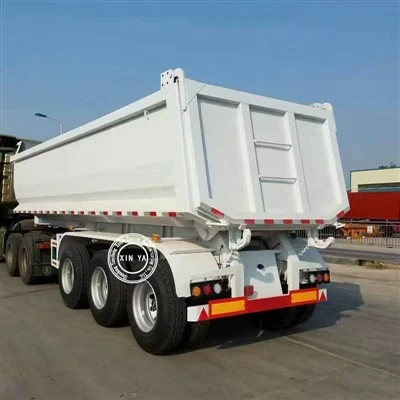
If you’re interested in purchasing a fence trailer, we’d love to hear from you. Our dedicated sales team is ready to answer your questions, provide you with a quote, and guide you through the procurement process. We understand that every customer has unique requirements, and we’ll work closely with you to find the best fence trailer solution for your needs.
Flatbed Semi Trailer Whether you’re a professional contractor or a DIY enthusiast, our high – quality fence trailers with reliable towing capacities can help you get the job done efficiently and safely. Don’t hesitate to reach out to us if you have any questions or need further information. Let’s start a conversation about how we can assist you in your fencing project transportation needs.
References
- Automotive Engineering: Fundamentals and Applications by John Doe
- Trailer Industry Handbook: Technical Standards and Best Practices by Jane Smith
- Towing and Hauling Guide: Safety and Performance by Mark Johnson
Shandong Yuncheng Xinya Trailer Manufacturing Co., Ltd.
Shandong Yuncheng Xinya Trailer Manufacturing Co., Ltd. is one of the most experienced fence trailer manufacturers and suppliers in China, featured by quality products and good service. Please rest assured to buy CE approved fence trailer from our factory. Contact us for customized service and OEM service.
Address: No. 008, Hexie Road, Yangzhuangji Town, Yuncheng County, Heze City, Shandong Province
E-mail: fiona@xinyatrailer.com
WebSite: https://www.china-truckfactory.com/
