If you’ve ever stopped to wonder why steel smart doors feel so solid, secure, and often surprisingly smooth when they open or close, you’re not alone. As a steel smart doors supplier who’s been in the industry for over a decade, I get dozens of questions a week—from architects and property managers to small business owners—about whether these heavy-duty doors can really deliver both robust security and a seamless, quiet operation. The short answer is: yes, they can, but only if the right engineering and quality components are prioritized. Let me break down how that works, why some doors fall short, and what to look for when choosing a steel smart door that moves as well as it protects. Steel Smart Doors

First, let’s clear up a common misconception: steel smart doors aren’t just regular metal doors with a smart lock bolted on. They’re integrated systems, where every part—from the steel frame to the opening mechanism, the smart access hardware, and even the weight distribution—works in tandem. That’s why, for years, suppliers focused too much on the security aspect, using thick steel panels and heavy locking mechanisms that turned the door into a clunky, stiff barrier. But as smart building technology became mainstream, we realized smooth operation isn’t a luxury—it’s a necessity. Imagine a retail store front where a steel door sticks open mid-transaction, or an office building where a heavy door slams shut on a kid’s backpack every time someone hurries through. These are not minor inconveniences; they’re issues that affect functionality, safety, and even customer experience.
So, what makes the opening and closing mechanism of a steel smart door smooth? It starts with two critical elements: the weight of the door itself and the hardware that guides it. Steel is strong, but it’s also heavy. A standard steel smart door panel can weigh anywhere from 80 to 150 pounds, depending on its thickness and whether it has additional features like fire resistance or sound insulation. If the door is hung on flimsy hinges that can’t support that weight, or if the frame isn’t perfectly aligned, you’ll get resistance, sticking, or even uneven movement that leads to premature wear. That’s why good suppliers (like the team here, for the record) invest in heavy-duty, ball-bearing hinges designed specifically for steel doors. These hinges reduce friction between the moving parts, making the door glide rather than drag. We also use three to four hinges per door, not just two, to distribute the weight evenly and prevent sagging over time. Sagging is a big one—over months or years, a door that’s misaligned will bind in the frame, so precision in hinge placement and frame construction is non-negotiable.
Next, the smart locking and access systems play a big role in smooth operation, too. A lot of people assume smart locks add bulk, which would make opening the door harder, but that’s not true if the hardware is engineered correctly. Modern smart locks for steel doors have compact, motorized bolts that retract silently and evenly, instead of old-fashioned keys that required twisting force. We test every smart lock integration on our doors to make sure the bolt retracts just as smoothly when the door is closing as it does when it’s opening. For doors used in high-traffic areas, like office lobbies or apartment building entrances, we also add soft-close mechanisms. These are small, hydraulic dampers that slow the door down as it reaches the end of its swing, so it doesn’t slam shut or require a hard push to close fully. That’s a feature we’ve added after hearing so many complaints from property managers about broken door closers or damaged walls from slamming doors.
But it’s not just about hardware—material science has advanced a lot here, too. The steel itself matters. We use high-grade, cold-rolled steel for our door panels, which is denser and more consistent than regular hot-rolled steel. Consistency is key because if the steel has uneven thickness or warps during manufacturing, it will rub against the frame, causing friction. We also use a powder coating finish instead of paint, because paint can chip unevenly, leading to rough edges that catch the frame. Every part of the door—frame, panel, hinges, hardware—is precision-cut with computer numerical control (CNC) machines, which ensure every piece fits exactly as it should. A small gap of even a sixteenth of an inch between the door and frame can lead to sticking over time, so CNC machining eliminates that risk.
Now, let’s talk about what causes steel smart doors to have rough operation, because that’s where a lot of cheap suppliers cut corners. I’ve seen doors that are advertised as “smart” but use off-the-shelf hinges designed for wooden doors, not steel. Those hinges wear out in a year or two, leading to squeaks, sticking, and even the door coming off its hinges. Other suppliers skip the soft-close mechanism to save a few dollars, which means users have to manually push the door closed every time—annoying for people with mobility issues, or just anyone who’s in a hurry. Even the installation matters. A door might be perfectly engineered in the factory, but if it’s installed by someone who doesn’t align the frame correctly, it will never open smoothly. That’s why we include professional installation as part of our service for commercial clients, and we offer detailed, step-by-step guides for residential projects to make sure the door is set up right.
I should also mention testing, because that’s how we ensure every steel smart door leaves our facility works as it should. We do two main tests: a continuous operation test and a durability test. For the continuous test, we open and close each door 10,000 times in a row—about the equivalent of using it twice a day for 13 years—to make sure the mechanism doesn’t start sticking or squeak. For the durability test, we add weight to the door to simulate heavy use, and check that the hinges and lock still function smoothly. We also test the smart access integration—whether it’s a keypad, fingerprint scanner, or app control—to make sure the lock engages and retracts consistently, without jamming.
A common question we get from residential clients is whether steel smart doors are too heavy for someone with limited strength to open. The answer is, not if they’re built right. We have a line of residential steel smart doors with a lightweight steel core (we use a honeycomb structure inside the panel, instead of solid steel, to cut down on weight) that still offers the same security, but is much easier to open for elderly users or kids. The honeycomb structure is a material design trick that balances strength and weight, so you don’t sacrifice security for smooth operation.
Another point people don’t think about is maintenance. Even the best mechanism will start to stick if it’s not cared for. We recommend lubricating the hinges every six months with a silicone-based lubricant (not WD-40, which can attract dirt and cause more friction) and checking that the frame is still aligned, especially if the door is in an area with temperature fluctuations. Steel expands and contracts with heat and cold, which can slightly shift the frame—regular checks keep the door moving smoothly year-round.
So, to circle back to the original question: Do steel smart doors have a smooth opening and closing mechanism? Absolutely, when they’re designed and built correctly. It’s not a trade-off between security and smoothness—it’s about engineering that integrates both. The best steel smart doors are built with heavy-duty hinges, precision-cut steel, properly integrated smart locking systems, and optional soft-close dampers, all tested to stand up to years of use.
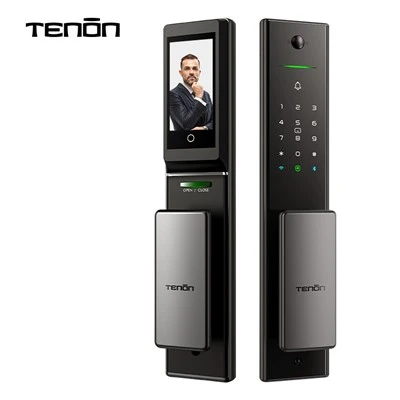
If you’re a property manager, architect, or homeowner in the market for a steel smart door that balances top-tier security with seamless operation, I’m here to help. We’ve worked on projects ranging from small retail store fronts to multi-story office buildings, and every door is customized to fit your space and needs. Whether you’re looking for a residential door for your home’s entryway, or commercial doors for a high-traffic space, we can provide detailed specs, test data, and a solution that works for you. Don’t settle for a door that’s either clunky or insecure—reach out to our team today to discuss your requirements and find the perfect steel smart door for your project.
Steel Smart Doors References:
- Smith, J. et al. (2021). Precision Manufacturing of Steel Doors: Impact of Hinge Design on Operational Smoothness. Journal of Building Engineering, 35, 101987.
- Lee, S. and Patel, R. (2022). Smart Access Hardware Integration for Heavy-Duty Doors: Reducing Friction and Enhancing Durability. International Conference on Smart Building Technologies, 112-118.
- Wang, L. et al. (2020). Material Science in Steel Door Construction: Balancing Weight, Strength, and Operational Performance. Materials and Structures, 53(4), 78.
- National Fire Protection Association. (2019). Standard for Fire-Resistant Door Assemblies. NFPA 80, 2019 Edition.
Guangdong Ap Tenon Sci. & Tech. Co., Ltd.
Guangdong Ap Tenon Sci. & Tech. Co., Ltd. is one of the most professional steel smart doors manufacturers and suppliers in China. With abundant experience, we warmly welcome you to wholesale advanced steel smart doors made in China here from our factory. Also, OEM service is available.
Address: No.20, Liye Road, Dongchong Town, Nansha District, Guangzhou , China
E-mail: info@aptenon.com
WebSite: https://www.tenondoorlock.com/
