Hey there, if you’ve ever dug into knit fabrics for anything from tees to hoodies to activewear, you’ve probably heard the terms single-jersey and double-jersey thrown around a lot. As someone who’s been in the knitted fabric game for over a decade, I can’t tell you how many times I’ve gotten a call from a small boutique owner or a new brand owner asking, “Wait, what’s the actual difference between these two—because one feels way too thin and the other is way too bulky for what I need?” It’s such a common question, and honestly, it makes sense—most people just see “knit fabric” and assume it’s all the same, but trust me, there’s a huge gap between single and double jersey that totally changes what you can do with it. Let’s break this down like we’re chatting over coffee (no stuffy industry jargon, promise). Knitted Fabric
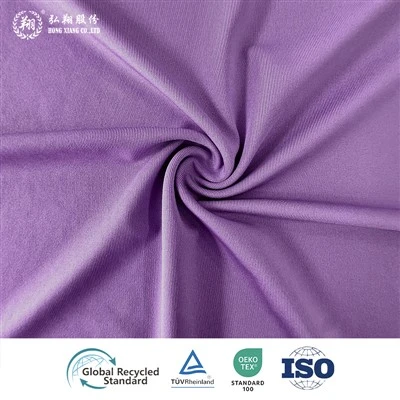
First off, let’s start with the super basics: what even is the difference in how they’re made? That’s where it all starts, right? Single-jersey (sometimes called jersey fabric, though people sometimes shorten it to just “single”) is made on a single circular knitting machine that only has one set of needles on one side of the machine. Think of it like a chain of stitches that only goes in one direction. You know how when you pull a thread on a regular tee, a hole runs straight across? That’s a dead giveaway for single-jersey. It’s a single layer of stitches, so it’s lightweight, stretchy in one direction (usually lengthwise), and has that familiar “face” side that’s smooth and right-side out, and a “back” side that’s a little loopy, sometimes called a pique or terry if it’s a little thicker.
Double-jersey, on the other hand, is built on two sets of needles—one on the front and one on the back of the circular knitting machine. So it’s like two layers of stitches interlocked together, not just stacked. That’s why it’s called double—because it’s two separate needle beds working in tandem. No wonder it’s totally different in feel and function. I’ve had customers come in thinking double-jersey is just a thicker single, but nope—it’s not doubled thickness, it’s doubled structure. That interlock is key here.
Now let’s talk about the feel and weight, because that’s the first thing people notice when they touch fabric. Single-jersey is light, stretchy, and breathable. It’s the fabric your basic cotton tee is made of—soft, flows well, perfect for hot weather, layering under a jacket, or anything where you want comfort without bulk. But here’s the catch: it’s not super stable. If you stretch it side to side, it doesn’t bounce back well, and it can curl at the edges if you cut it, right? Ever cut a tee shirt that’s started curling up at the neck or the hem? That’s single-jersey for you. It’s a fun, casual fabric, but it’s not ideal for things that need to hold their shape.
Double-jersey is the opposite in so many ways. It’s heavier, sturdier, doesn’t curl at all because both sides are the same structure. Wait, did you know that? Double-jersey is reversible! That’s a huge perk. The face and back sides look almost identical, so if you want a garment where both sides look good without turning it inside out, that’s your go-to. It’s less stretchy than single-jersey, more stable, holds its shape way better over time. I once had a customer making loungewear sets who swears by double-jersey for the waistband of their joggers because it doesn’t stretch out like single-jersey elastic would. But because it’s denser, it’s not as breathable as single. For people who live in super hot climates, double-jersey might feel a little too heavy for a summer tee, but it’s perfect for fall sweaters, blazers, or structured tops where you need that crisp look.
Next up, uses—this is where most people pick which one they need, so let’s get specific. Single-jersey is everywhere in fast fashion basics, athleisure tees, baby clothes (it’s gentle on sensitive skin), dresses, and even linings sometimes. It’s cheap to make, lightweight, and flexible, so it works for quick turns and mass production. I work with a lot of small DTC brands that launch graphic tees all the time, and 9 times out of 10, they order single-jersey because it’s soft, prints well, and moves with the body. But it’s not for everything. If you’re making a structured button-down shirt that needs to keep its shape, or a blazer, or a tailored dress that doesn’t sag, double-jersey is way better. I had a wedding dress designer reach out to me last year because she was tired of her custom gowns bodices sagging after a few wears—single-jersey just couldn’t hold the structure, so switching to double-jersey fixed that. It’s also great for loungewear, activewear that needs compression, uniforms, and even upholstery if you want a stretchy, durable fabric that’s not too heavy.
Then there’s care and durability, which is a big one for customers. Single-jersey is easy to wash, doesn’t shrink too much (as long as you pre-wash it properly), but it does pill more than double-jersey because the looser back side can snag. Over time, single-jersey tees can get stretchy and saggy at the hem, which is why you’ll see people hoarding their old “perfect” tees—they’ve been stretched out from years of washing. Double-jersey is more resistant to pilling, holds its shape way longer, doesn’t sag as easily, and is more resistant to wrinkling. I’ve had customers tell me their double-jersey blazers look crisp even after a week of travel, while their single-jersey tees are rumpled by midday. That’s not to say single is low quality— it’s just designed for a different use case. If you need something cheap, easy, and disposable for fast fashion, single is great. If you want something that lasts, double is worth the extra few cents per yard.
Wait, let’s also talk about stretch and recovery, because that’s a technical thing that trips a lot of people up. Single-jersey has what’s called “weft stretch”—it stretches along the length of the yarn, which is why tees stretch when you put them on. But because it’s only one layer, the recovery (how well it bounces back) is not great. Double-jersey has stretch too, but it’s more “controlled stretch” because it’s two layers interlocked. It stretches evenly in both directions, not just one, and bounces back way better. That’s why it’s so popular for activewear— it moves with your body but doesn’t bag after a workout. I once tested a pair of double-jersey leggings vs. single-jersey leggings for a customer, and the single ones were stretched out after one use, while the double ones looked almost new after 10 washes.
Also, let’s clear up a common myth: people think double-jersey is always made of polyester or a blend, and single is only cotton. Nope! You can make single or double-jersey out of cotton, polyester, spandex, modal, whatever fiber you want. For example, a modal single-jersey is super soft, even stretchier than cotton, while a polyester double-jersey is durable and wrinkle-resistant for uniforms. It’s not the fiber that defines it, it’s the knitting structure. That’s a big mistake new customers make—they come in asking for “cotton double-jersey” like it’s a different thing, but no, you can make both with any fiber.
As a supplier, I see a lot of customers make the wrong choice at first because they don’t understand these differences. Last month, a small brand owner ordered 500 yards of single-jersey for their structured work blazers, and halfway through production, they realized it sagged too much. We had to rush them double-jersey at the last minute, which cost them extra fees and delayed their launch. That’s the kind of avoidable mistake that comes from not knowing the basic differences between these two fabrics. So my advice to anyone out there launching a new line is: think about what the garment needs to do. If it’s lightweight, breathable, for summer or casual wear, single is your guy. If it’s structured, needs to hold shape, reversible, or for cooler weather, double is the way to go.
Another thing people ask me: what about cost? Single-jersey is usually cheaper per yard than double-jersey, right? Because it’s made on simpler, faster machines that produce more yards per hour. Double-jersey requires more precise machines, takes longer to make, so it’s a bit more expensive. But as I always tell customers, you get what you pay for. If you’re making a high-end line that needs to last, spending a little extra on double-jersey is worth it for the quality. For a fast-fashion line that turns over every season, single is more cost-effective for your bottom line.
Wait, let’s also mention the texture and drape, because that’s super important for design. Single-jersey has a soft, fluid drape— it hangs loosely, flows over the body, which is why it’s great for dresses and tees that have a relaxed fit. Double-jersey has a stiffer drape— it holds its form, which is perfect for structured pieces like collared shirts, blazers, and tailored tops that need a sharp silhouette. I’ve even had a costume designer order double-jersey for a superhero cape because it stands up straight and doesn’t flop around like a single-jersey cape would. That’s a perfect example of how structure changes the use case.
Is there any overlap? Sure, sometimes you’ll see brands use a blend, but even then, the core structure is still either single or double. Some activewear uses a rib-knit, which is a type of double-jersey, for waistbands and cuffs, because it has that controlled stretch. But the main two are still single and double, and the differences are pretty stark once you get past the basics.
At the end of the day, whether you’re a seasoned designer or just starting out, knowing the difference between single and double-jersey is crucial to getting the right fabric for your project. You don’t want to waste money on a fabric that doesn’t hold up, or end up with a garment that doesn’t fit the vision you had. As someone who’s been in this game for years, I’m here to help you navigate all that—whether you’re ordering 50 yards for a sample line or 50,000 yards for a big production run, I can walk you through what’s best for your needs, no confusing jargon, no pressure. If you’re tired of guessing which fabric is right for your next project, hit me up to chat through the details, and we can figure out the perfect solution for your line.
Plain Knitted Fabric References
Textile Institute. (2019). Knitting Technology: A Complete Handbook. Woodhead Publishing.
Clark, M. (2021). Textiles and Fashion: Design, Innovation, and Production. Bloomsbury Visual Arts.
Tortora, P. G., & Merkel, R. S. (2018). Fairchild’s Textile Simplified (11th ed.). Bloomsbury Fashion Books.
Zhejiang Hongxiang Textile Technology Co., Ltd.
Zhejiang Hongxiang Textile Technology Co., Ltd. is one of the most professional knitted fabric manufacturers and suppliers in China. With abundant experience, we warmly welcome you to wholesale custom made knitted fabric from our factory. If you have any enquiry about cooperation, please feel free to email us.
Address: No. 8, 12th Road, Warp Weaving Park, Maqiao Street, Haining City, Jiaxing City, Zhejiang Province
E-mail: gd@hongxiang888.cn
WebSite: https://www.h-xiang.com/
