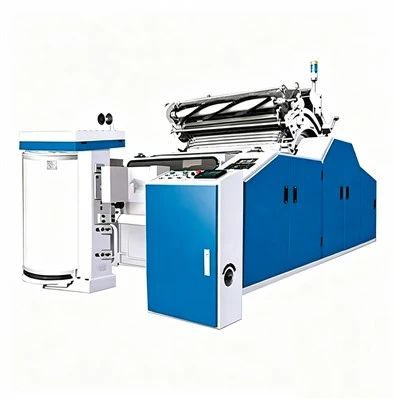
A roller carding machine is a crucial piece of equipment in the textile industry, playing a vital role in the initial processing of fibers. As a leading supplier of carding machines, I’ve encountered numerous in – depth inquiries about the working principle of these machines from our clients. Understanding how a roller carding machine functions is essential not only for those operating the machines but also for those looking to invest in high – quality carding solutions. Carding Machine
1. Basic Concept of Carding
Before delving into the working principle of a roller carding machine, it’s important to understand the concept of carding itself. Carding is a mechanical process that separates, aligns, and cleans fibers. This process transforms a mass of disordered fibers into a web or sliver of parallel – laid, clean fibers. The primary goals of carding are to open the fibers from their clumped state, remove impurities such as dust, dirt, and short fibers, and align the long fibers in a more or less parallel direction.
2. Structure of a Roller Carding Machine
A roller carding machine consists of several key components, each with its specific function. The main parts typically include the feeding device, licker – in rollers, cylinder, workers, strippers, doffer, and the output mechanism.
- Feeding Device: This is where the raw fiber material is introduced into the machine. The feeding device ensures a uniform and controlled supply of fibers to the subsequent processing areas. It can be a simple hopper – based system or a more complex arrangement that uses conveyor belts and feed rollers to regulate the flow of fibers.
- Licker – in Rollers: These are the first set of rollers that the fibers encounter. The licker – in rollers have sharp teeth on their surface. They rotate at a high speed and are designed to open the large fiber tufts received from the feeding device. The high – speed rotation of the licker – in rollers helps to break up the dense fiber masses into smaller, more manageable pieces and also starts the process of removing larger impurities.
- Cylinder: The cylinder is a large, rapidly rotating roller. It is covered with fine teeth or wires. The cylinder is the heart of the carding machine, where most of the fiber alignment and cleaning take place. As the fibers are transferred from the licker – in rollers to the cylinder, they are further opened and individualized due to the action of the cylinder’s teeth.
- Workers and Strippers: Arranged around the cylinder, the workers and strippers work in pairs. The workers rotate more slowly than the cylinder. When the fibers come into contact with the workers, the teeth on the workers catch some of the fibers and perform a fine – combing action, further aligning and cleaning the fibers. The strippers then remove the fibers from the workers and return them to the cylinder for repeated processing. This back – and – forth movement between the workers, strippers, and the cylinder helps to achieve a high degree of fiber parallelization and impurity removal.
- Doffer: The doffer is another important roller. It rotates at a slower speed than the cylinder. The doffer’s function is to remove the carded fibers from the surface of the cylinder. The teeth on the doffer are designed to pick up the fibers that have been processed on the cylinder and form a continuous web of fibers.
- Output Mechanism: After the fibers are removed from the doffer, the output mechanism takes over. This mechanism can vary depending on the type of end – product required. It may convert the fiber web into a sliver, which is a continuous strand of loose, parallel fibers, or it could be used to produce other forms such as a batt or a lap.
3. The Working Process Step by Step
Step 1: Feeding
The raw fiber material is placed in the feeding device. The feeding system carefully meters the amount of fiber being fed into the machine to ensure a consistent supply. This is important because an uneven feed can lead to variations in the quality of the carded product. For example, if too much fiber is fed at once, the machine may not be able to process it effectively, resulting in poor fiber alignment and incomplete impurity removal.
Step 2: Initial Opening by Licker – in Rollers
As the fibers enter the machine, they reach the licker – in rollers. The high – speed rotation of the licker – in causes the teeth to penetrate the fiber tufts. The impact and the action of the teeth break the large tufts into smaller pieces. At the same time, larger impurities such as twigs, leaves, or big dust particles are caught by the licker – in teeth and can be removed through a cleaning mechanism associated with the licker – in rollers.
Step 3: Main Carding on the Cylinder
The partially opened fibers are then transferred to the cylinder. The cylinder rotates at a high speed, and its fine teeth engage with the fibers. The fibers are further opened and individualized as they are carried along by the cylinder. During this process, the fibers come into contact with the workers and strippers. The workers, with their slower – moving teeth, grab some of the fibers from the cylinder and perform a detailed combing action. The strippers then remove the fibers from the workers and return them to the cylinder. This repeated interaction between the cylinder, workers, and strippers helps to align the fibers in a parallel direction and remove any remaining short fibers and impurities.
Step 4: Fiber Collection by the Doffer
Once the fibers have been thoroughly carded on the cylinder, the doffer comes into play. The slower – moving doffer has teeth that are positioned to pick up the processed fibers from the cylinder. As the doffer rotates, it gradually accumulates a layer of carded fibers on its surface, forming a continuous web.
Step 5: Output Formation
The fiber web on the doffer is then transferred to the output mechanism. If the goal is to produce a sliver, the web is condensed and pulled through a set of rollers to form a long, continuous strand of parallel fibers. This sliver can then be used in further textile processes such as spinning. In some cases, the web may be formed into a batt or a lap, depending on the specific requirements of the textile production.
4. Factors Affecting the Performance of a Roller Carding Machine
Several factors can influence the performance and efficiency of a roller carding machine.
- Fiber Properties: Different types of fibers have different characteristics such as length, fineness, and strength. These properties can affect how easily the fibers are carded. For example, long and fine fibers may require more careful handling during the carding process to prevent breakage and ensure proper alignment. Natural fibers like cotton and wool may also have different amounts of impurities, which need to be taken into account when adjusting the machine settings.
- Machine Speed: The rotational speed of the various rollers, especially the cylinder and the doffer, can significantly impact the quality of the carded product. A higher speed may lead to faster production but can also cause more fiber breakage if not properly adjusted. Similarly, the speed ratio between the workers and the cylinder affects the intensity of the combing action.
- Teeth Configuration: The design and arrangement of the teeth on the cylinders, workers, strippers, and doffer are crucial. The size, shape, and density of the teeth determine how effectively the fibers are opened, aligned, and cleaned. Different teeth configurations are used for different types of fibers and desired end – products.
5. Our Advantages as a Carding Machine Supplier
As a well – established carding machine supplier, we take pride in offering high – quality roller carding machines. Our machines are designed with the latest technology to ensure optimal performance and efficiency.
- Advanced Design: Our engineers focus on incorporating the most advanced design concepts into our carding machines. This includes using the latest tooth configurations and roller speed control systems to achieve the best possible fiber processing results. We continuously research and develop new designs to meet the changing needs of the textile industry.
- Customization Options: We understand that different customers have different requirements. That’s why we offer a wide range of customization options for our carding machines. Whether it’s adjusting the machine size, roller speed, or tooth density, we can tailor our machines to meet specific production needs. This allows our customers to get the most out of their carding machines and produce high – quality textile products.
- After – Sales Service: We believe that excellent after – sales service is just as important as providing high – quality products. Our team of experienced technicians is always ready to provide support and maintenance services. We offer training programs for machine operators to ensure they can operate the machines safely and efficiently. We also provide timely replacement parts to minimize machine downtime.
6. Conclusion and Call to Action
In conclusion, a roller carding machine is a complex yet essential piece of equipment in the textile industry. Understanding its working principle is key to making the right investment decisions and achieving high – quality textile products. Whether you are a small – scale textile manufacturer or a large industrial producer, having a reliable and efficient carding machine can significantly improve your production process.
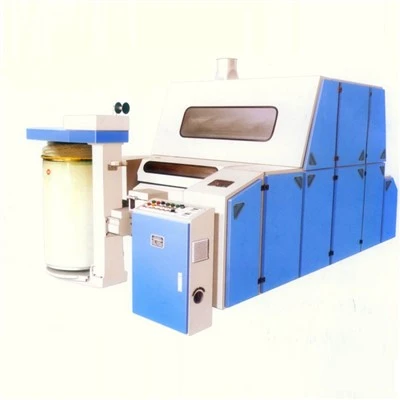
If you are interested in learning more about our roller carding machines or would like to discuss your specific requirements, we invite you to reach out to us. Our team of experts is ready to provide you with detailed information and assist you in finding the perfect carding solution for your business. Take the first step towards enhancing your textile production today by contacting us for a procurement discussion.
References
Auxiliary Machinery [1] Morton, W. E., & Hearle, J. W. S. (2008). Physical Properties of Textile Fibers. Woodhead Publishing.
[2] Postle, R. (2001). Handbook of Nonwovens. Woodhead Publishing.
[3] Lord, P. R., & Mohamed, A. M. (2012). Yarn Science. Woodhead Publishing.
Shandong Hongye Machinery Co., Ltd.
Shandong Hongye Machinery Co., Ltd. is one of the most professional carding machine manufacturers and suppliers in China, featured by quality products and low price. Please rest assured to buy advanced carding machine in stock here and get quotation from our factory. Also, 1 year warranty is available.
Address: Room 1104, Building No. 2, Haier Yunjie, No. 99 Chongqing South Road, Qingdao, China
E-mail: sales@seavincn.com
WebSite: https://www.sdhymachinery.com/
