As a reliable supplier in the textile loom industry, I’ve witnessed firsthand the evolution and remarkable impact of jacquard looms. These advanced machines have revolutionized the textile manufacturing process, offering numerous advantages that cater to a wide range of needs, from small – scale artisanal work to large – scale industrial production. Textile Loom
1. Unparalleled Design Flexibility
One of the most significant advantages of jacquard looms is the incredible design flexibility they provide. Traditional looms are often limited in the complexity of patterns they can produce. In contrast, jacquard looms can create highly detailed and intricate designs with ease. Each individual warp thread can be controlled independently, allowing for the creation of patterns that range from simple geometric shapes to elaborate floral motifs, portraits, and even complex three – dimensional – like effects.
This flexibility is a game – changer for designers. They are no longer restricted by the constraints of basic weaving techniques. For example, in the fashion industry, designers can use jacquard looms to produce unique fabrics with custom – made patterns for high – end clothing lines. In the home textile sector, manufacturers can create luxurious bedspreads, curtains, and upholstery fabrics with one – of – a – kind designs that set their products apart from the competition.
For interior designers, jacquard fabrics can add a touch of sophistication and uniqueness to any space. They can be used to create feature walls, accent pieces, or to make a statement in a commercial setting. In the artisanal textile community, jacquard looms enable weavers to express their creativity fully, producing pieces that are truly works of art.
2. High Precision and Quality
Jacquard looms are engineered to deliver a high level of precision. The independent control of individual warp threads ensures that every pattern element is accurately reproduced. This precision results in fabrics with sharp, clear lines and well – defined details.
The quality of the finished product is also significantly enhanced. The tight and consistent weave created by jacquard looms makes the fabric more durable. It can withstand regular use, wear and tear, and cleaning processes better than fabrics produced on less precise looms.
In industries where quality is non – negotiable, such as the automotive and aviation industries, jacquard – woven fabrics are highly sought after. For example, in car interiors, jacquard fabrics can provide a luxurious look and feel while also being able to resist the rigors of daily use. The precision of the jacquard loom also means that color registration is more accurate, allowing for vibrant and true – to – design color combinations.
3. Increased Productivity
In modern textile manufacturing, productivity is a key factor. Jacquard looms are designed to be highly efficient, which translates into increased production rates. With the ability to automate the pattern – making process, these looms can produce fabrics at a much faster pace compared to manual or semi – automated weaving methods.
The use of computer – controlled jacquard systems further enhances productivity. These systems allow for quick pattern changes, reducing downtime between production runs. Operators can simply input a new design into the computer, and the loom will adjust accordingly. This not only saves time but also reduces the need for skilled labor to manually set up the loom for different patterns.
In large – scale textile factories, the increased productivity of jacquard looms can lead to significant cost savings. More fabric can be produced in less time, which means that manufacturers can meet market demand more effectively. This is especially important in industries where trends change rapidly, such as the fashion industry, where being able to quickly produce new designs is crucial for staying competitive.
4. Cost – effectiveness in the Long Run
Although jacquard looms may have a higher initial investment compared to some traditional looms, they offer long – term cost – effectiveness. The increased productivity and high – quality output mean that manufacturers can produce more sellable products in less time. This leads to higher revenues and a better return on investment.
The precision of jacquard looms also reduces waste. Since the patterns are accurately reproduced, there is less chance of producing defective or sub – standard fabrics. This saves on the cost of raw materials and labor associated with rework or disposal of faulty products.
In addition, the durability of jacquard – woven fabrics can lead to cost savings for end – users. For example, in the home textile market, consumers may be willing to pay a slightly higher price for a jacquard – woven curtain or bedspread because they know it will last longer. This can result in fewer replacement purchases over time, which is beneficial for both the consumer and the environment.
5. Adaptability to Different Materials
Jacquard looms are highly adaptable and can work with a wide variety of materials. Whether it’s natural fibers like cotton, silk, wool, and linen, or synthetic fibers such as polyester, nylon, and rayon, jacquard looms can handle them all. This versatility makes them suitable for a diverse range of industries.
In the fashion industry, different materials are used to achieve various looks and feels. For example, silk jacquard fabrics are often used for elegant evening wear, while cotton jacquard is popular for everyday clothing. In the technical textile sector, jacquard looms can be used to produce fabrics with specific properties, such as fire – resistance or high – strength, by using appropriate fibers.
The ability to work with different materials also allows manufacturers to experiment and create innovative fabric blends. They can combine the best properties of different fibers to produce fabrics that are both functional and aesthetically pleasing.
6. Customization for Niche Markets
In today’s market, consumers are increasingly looking for unique and personalized products. Jacquard looms are the perfect solution for meeting this demand. They enable manufacturers to offer customized fabrics to niche markets.
For example, in the wedding industry, couples may want to have custom – designed jacquard tablecloths or wedding gowns with their initials or a unique pattern. In the corporate sector, companies may require customized jacquard – woven fabrics for uniforms or promotional items.
By offering customization options, textile manufacturers can target specific customer segments and differentiate themselves from competitors. This can lead to increased customer loyalty and higher profit margins.
7. Preservation of Traditional Weaving Techniques
While jacquard looms are modern and technologically advanced machines, they also play an important role in the preservation of traditional weaving techniques. Many traditional weaving patterns from different cultures around the world can be replicated using jacquard looms.
This not only helps to keep these cultural traditions alive but also allows modern manufacturers to incorporate these elements into contemporary designs. For example, traditional Indian or Persian weaving patterns can be used in modern fashion or home decor to add a touch of cultural heritage.
In addition, the use of jacquard looms in the preservation of traditional techniques can also provide economic opportunities for communities that rely on traditional weaving. By producing high – quality, marketable products using these techniques, these communities can generate income and support their local economies.
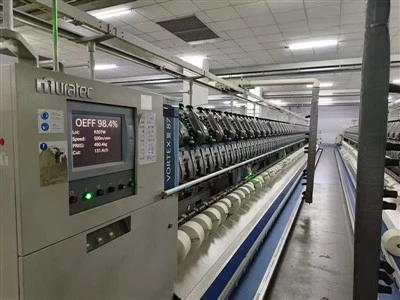
Roving Frame Machine In conclusion, the advantages of jacquard looms are numerous and far – reaching. From design flexibility and high precision to increased productivity and cost – effectiveness, these looms are a valuable asset in the textile industry. As a textile loom supplier, I understand the importance of providing our customers with the best equipment to meet their needs. If you are interested in exploring the possibilities of jacquard looms for your textile manufacturing business, I invite you to contact me for a detailed discussion. Whether you are a small – scale weaver or a large – scale industrial manufacturer, we can work together to find the perfect jacquard loom solution for you.
References
- Joseph, J. B., & Damodaran, A. (2019). Textile Design and Technology: A Practical Approach. CRC Press.
- Postle, R. (2001). The Technology of Woven Fabrics: An Introduction. Woodhead Publishing.
- Tortora, P. G., & Merkel, J. B. (2016). Fairchild’s Dictionary of Textiles. Fairchild Books.
Shandong Hongye Machinery Co., Ltd.
Shandong Hongye Machinery Co., Ltd. is one of the most professional textile loom manufacturers and suppliers in China, featured by quality products and low price. Please rest assured to buy advanced textile loom in stock here and get quotation from our factory. Also, 1 year warranty is available.
Address: Room 1104, Building No. 2, Haier Yunjie, No. 99 Chongqing South Road, Qingdao, China
E-mail: sales@seavincn.com
WebSite: https://www.sdhymachinery.com/
