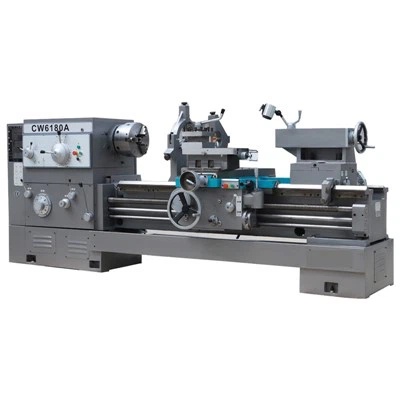
Adjusting the feed force in a CNC lathe is a critical aspect that directly impacts the machining quality, tool life, and overall efficiency of the manufacturing process. As a supplier of CNC lathes, I have witnessed firsthand the challenges that operators face when it comes to optimizing feed force settings. In this blog post, I will share some insights and practical tips on how to adjust the feed force in a CNC lathe effectively. CNC Lathe

Understanding the Importance of Feed Force
The feed force in a CNC lathe refers to the force applied to the cutting tool as it moves along the workpiece. It plays a crucial role in determining the quality of the machined surface, the accuracy of the dimensions, and the rate of material removal. If the feed force is too high, it can lead to excessive tool wear, poor surface finish, and even damage to the workpiece or the machine itself. On the other hand, if the feed force is too low, the machining process will be inefficient, and the productivity will be significantly reduced.
Factors Affecting Feed Force
Several factors influence the feed force in a CNC lathe, and understanding these factors is essential for making accurate adjustments. Here are some of the key factors:
Workpiece Material
Different materials have different mechanical properties, such as hardness, toughness, and ductility. Harder materials generally require higher feed forces to cut through, while softer materials can be machined with lower feed forces. For example, machining stainless steel will typically require a higher feed force compared to machining aluminum.
Cutting Tool Geometry
The geometry of the cutting tool, including the rake angle, clearance angle, and cutting edge radius, has a significant impact on the feed force. A tool with a positive rake angle will generally require less feed force compared to a tool with a negative rake angle. Similarly, a tool with a sharp cutting edge will require less feed force than a tool with a dull cutting edge.
Cutting Speed
The cutting speed, which is the speed at which the cutting tool moves relative to the workpiece, also affects the feed force. As the cutting speed increases, the feed force generally decreases. However, there is an optimal cutting speed range for each material and tool combination, and exceeding this range can lead to increased tool wear and reduced machining quality.
Depth of Cut
The depth of cut, which is the thickness of the material removed in each pass of the cutting tool, has a direct impact on the feed force. As the depth of cut increases, the feed force also increases. Therefore, it is important to select an appropriate depth of cut based on the material, tool, and machining requirements.
Methods for Adjusting Feed Force
There are several methods for adjusting the feed force in a CNC lathe, and the choice of method depends on the specific machine and the machining requirements. Here are some common methods:
Manual Adjustment
In some CNC lathes, the feed force can be adjusted manually using the control panel or the handwheel. This method is suitable for simple machining operations where the feed force requirements are relatively constant. To adjust the feed force manually, the operator needs to refer to the machine’s manual and follow the instructions for adjusting the feed rate and the cutting parameters.
Automatic Adjustment
Many modern CNC lathes are equipped with automatic feed force adjustment systems. These systems use sensors to measure the feed force in real-time and adjust the feed rate and the cutting parameters automatically to maintain a constant feed force. This method is more efficient and accurate than manual adjustment, especially for complex machining operations where the feed force requirements vary continuously.
Toolpath Optimization
Another way to adjust the feed force is to optimize the toolpath. By carefully planning the toolpath, the operator can reduce the cutting forces and improve the machining efficiency. For example, using a trochoidal toolpath can reduce the cutting forces and improve the surface finish compared to a traditional linear toolpath.
Step-by-Step Guide to Adjusting Feed Force
Here is a step-by-step guide to adjusting the feed force in a CNC lathe:
Step 1: Determine the Machining Requirements
The first step is to determine the machining requirements, including the material, the dimensions, the surface finish, and the tolerance. Based on these requirements, select the appropriate cutting tool and the cutting parameters, such as the cutting speed, the feed rate, and the depth of cut.
Step 2: Set the Initial Feed Force
Once the cutting tool and the cutting parameters have been selected, set the initial feed force based on the machine’s manual and the recommended values for the material and the tool. Start with a relatively low feed force and gradually increase it until the desired machining results are achieved.
Step 3: Monitor the Machining Process
During the machining process, monitor the feed force using the machine’s sensors or a separate force measuring device. Pay attention to any changes in the feed force, such as sudden spikes or fluctuations, which may indicate a problem with the cutting tool or the machining process.
Step 4: Make Adjustments as Needed
Based on the monitoring results, make adjustments to the feed force as needed. If the feed force is too high, reduce the feed rate or the depth of cut. If the feed force is too low, increase the feed rate or the depth of cut. Make small adjustments at a time and monitor the machining process closely to ensure that the adjustments are having the desired effect.
Step 5: Optimize the Toolpath
In addition to adjusting the feed force, consider optimizing the toolpath to further reduce the cutting forces and improve the machining efficiency. Use a CAM software to generate the toolpath and experiment with different toolpath strategies to find the one that works best for your application.
Tips for Adjusting Feed Force
Here are some additional tips for adjusting the feed force in a CNC lathe:
Use High-Quality Cutting Tools
Using high-quality cutting tools can significantly reduce the feed force and improve the machining quality. Invest in tools that are made from high-performance materials and have a sharp cutting edge.
Keep the Cutting Tools Sharp
Dull cutting tools require higher feed forces and can lead to poor surface finish and increased tool wear. Regularly sharpen or replace the cutting tools to ensure that they are in good condition.
Lubricate the Cutting Process
Using a lubricant or a coolant can reduce the friction between the cutting tool and the workpiece, which in turn reduces the feed force and improves the machining quality. Choose a lubricant or a coolant that is suitable for the material and the machining process.
Train the Operators
Proper training of the operators is essential for ensuring that the feed force is adjusted correctly. Provide the operators with comprehensive training on the machine’s operation, the cutting parameters, and the feed force adjustment methods.
Conclusion
Adjusting the feed force in a CNC lathe is a complex but essential task that requires a good understanding of the machining process and the factors that affect the feed force. By following the tips and methods outlined in this blog post, you can optimize the feed force settings and improve the machining quality, tool life, and overall efficiency of your manufacturing process.
Milling Machine If you are interested in learning more about CNC lathes or need assistance with adjusting the feed force in your CNC lathe, please feel free to contact us. Our team of experts is always ready to help you find the best solutions for your machining needs.
References
- Smith, J. (2018). CNC Machining Handbook. Industrial Press.
- Jones, A. (2019). Cutting Tool Technology. McGraw-Hill Education.
- Brown, R. (2020). Machining Processes and Machine Tools. Pearson.
Henan Rowdai Machinery Equipment Co., Ltd.
As one of the most professional cnc lathe manufacturers in China, we’re featured by quality products and good price. Please rest assured to buy high-grade cnc lathe for sale here from our factory. If you have any enquiry about cooperation, please feel free to email us.
Address: Building 9, E-Commerce Industrial Park, High-Tech Zone, Zhengzhou, Henan, China
E-mail: rowdai@rowdai.com
WebSite: https://www.rowdai.com/
