If you’ve ever found yourself staring at a shelf full of DMR radios—whether for a weekend camp, a construction crew, a small business, or a personal hobby—you’ve probably wondered: how do you pick the right one for you? As a DMR radio supplier, I’ve talked to hundreds of folks who make that same mistake: grabbing the cheapest model or the most “popular” one, only to realize it can’t handle their needs a month later. I’m here to walk you through the stuff no sales brochure tells you, the stuff that actually matters when you’re comparing options. DMR RADIO
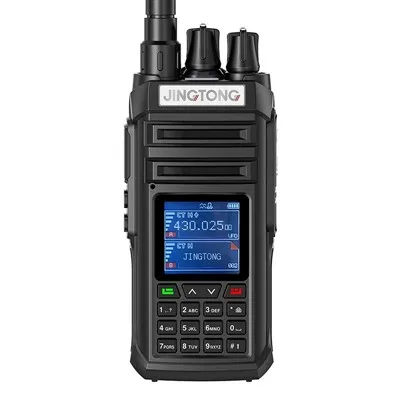
First, let’s break down what DMR even is, quick, because if you’re here, you might know, but it’s worth grounding this. DMR is a digital radio standard, right? It’s better than analog for most uses now—clearer audio, more channels, less interference, and extra features like GPS or group calling that analog can’t do. But not all DMR radios are made equal. The key here is matching the radio’s specs to your actual use case, not the other way around.
Let’s start with your number one question: what will you actually use this for? I get calls every week from guys who say “I need a DMR radio” and don’t even know if they’ll use it for a family camping trip, a 10-person landscaping crew, a 50-person construction site, or a mountain biking group of 20. That’s the first filter, so let’s go through the most common use cases and what you need to look for in each.
If you’re a casual user—like a hiker, weekend camper, small family get-together, or a neighborhood watch group of 5 to 10 people—you don’t need a $500 professional radio. Wait, let’s be clear here: casual doesn’t mean low quality, it means you don’t need overkill. For this group, the biggest thing is range and usability. A lot of entry-level DMR radios (I’m talking under $150, usually) have a 1 to 3 mile range in open areas, which is perfect for a day hike in the mountains where line of sight is clear, or a backyard campground. But here’s a gotcha: some cheap brands advertise “up to 5 miles” in tiny print that’s only under ideal conditions, which almost never happens. For casual use, you also don’t need a ton of features, but you do want something that’s easy to program. A lot of entry-level radios let you plug them into a computer with a USB cable to load your group’s frequency list, and even some let you program a few buttons right on the radio for quick calls. Avoid anything that requires a license here, too—wait, right, a quick note on licenses: in most countries, you don’t need a license for certain FRS/GMRS DMR radios, but if you’re using business or amateur frequencies, you do. For casual, stick to the license-free ones, that’s a huge headache saved.
Next, if you’re a small business or a crew—10 to 30 people: landscapers, plumbers, retail staff, small event crews. Here, range is non-negotiable, and durability matters way more than it does for casual use. A landscaper might be working across a 10-acre property with barns, trees, and metal buildings that block signals. So you need a radio that can handle 2 to 5 miles indoors and through obstacles. Most mid-tier DMR radios (between $150 and $300) do this, but look for ones with a higher wattage—usually 2 to 5 watts, vs. 1 to 2 watts on entry-level. Also, durability: if your radio is going to be dropped in mud, rain, or dust, look for IP ratings. IP67 means it’s dust-tight and can be submerged in up to 1 meter of water for 30 minutes, which is way better than IP54 (just splash-proof). For small crews, another big feature is group monitoring. Analog lets you listen to any channel, but DMR has digital private calls and group calls, so you can have a channel just for your crew, without talking over random people on other channels. Some mid-tier radios also have a battery that lasts 12 to 24 hours on a single charge, which is perfect for a full work day without needing to swap batteries. Don’t skip programming here, either—ask your supplier if they can pre-load your frequency list for you, because messing with programming is a pain if you’re not tech-savvy.
Now, the big one: medium to large operations—30 people or more, construction sites, factory floors, event production teams, security for a mall or stadium. This is where you need to stop thinking about individual radios and start thinking about a system. A lot of people buy individual DMR radios and then wonder why their range drops to half a mile on a construction site with steel beams. That’s because you need a repeater here. Repeaters are devices that boost the signal, so if you have a site that’s spread out, a repeater will extend your range by 10x or more. For this use case, you need professional-grade DMR radios, usually $300 and up. Look for 5 to 7 watt power, GPS built-in (so you can track your crew’s location, which is a lifesaver for construction sites where someone might be stuck), and encrypted calls if you’re talking about sensitive stuff, like a factory with proprietary info or a security team that doesn’t want random people listening. Also, battery life here should be 24 hours minimum, with maybe a spare battery, because you can’t afford a radio dying mid-shift. Another thing: if you have different teams on the same site, like electricians and carpenters, you want radios that can do multiple zones or channels, so electricians can have their own channel without bothering the carpenters. Most professional radios do this, but make sure the system you’re using (the repeaters and the radios) are from the same brand, because mixing brands can cause compatibility issues. I’ve seen this happen too many times: a customer buys a random brand of radio and a different brand of repeater, and they can’t connect half their radios to the repeater. It’s not worth the hassle.
Wait, there’s one category I almost missed: hobbyists and amateur radio operators. If you’re into ham radio, DMR is super popular now because of digital modes, repeater networking all over the world, and the ability to talk to hams in other countries. For ham users, you need a radio that’s FCC (or whatever your country’s regulatory body) approved for amateur bands, and you need a license, obviously. Prices here can go from $200 up to $1,000, depending on features like dual-band (VHF and UHF), digital APRS for tracking, and the ability to connect to the reflector networks. The big tip here for hams: don’t skimp on the programming and the ability to connect to local repeaters. A lot of entry-level ham DMR radios don’t have the memory to store hundreds of repeater frequencies, so make sure you check the memory capacity if you’re active in your local ham community.
Okay, so that’s use cases, but there are a few other specs that trip people up, no matter their needs. Let’s break those down simple, no jargon. First, wattage: lower wattage is fine for short range, higher wattage is for longer range or obstacles. But don’t get tricked by “max wattage” that’s only when you’re transmitting, it doesn’t drain the battery that much, so it’s not a big deal unless you’re on a big site. Second, battery: Li-ion is way better than NiMH, it lasts longer and doesn’t have memory effect (you don’t have to drain it all the way before charging). For professional use, get at least 2,600 mAh, for casual use, 1,800 mAh is enough. Third, accessories: do you need a belt clip? A speaker mic? A case? For construction, a heavy-duty belt clip is non-negotiable, because you’ll be clipping it to your work vest all day. For people who wear hats, a earpiece or a throat mic might be better than a regular earbud, because you don’t have to take your glove off to talk. A good supplier will give you free accessories with your order, or sell them at a decent price, so that’s something to factor in.
Wait, let’s talk about mistakes people make. The number one mistake I see is buying a radio for the wrong use case. A guy who runs a construction crew of 20 bought an entry-level $80 radio, and within a month, half of them were dying on the site because the range was too short. The other big mistake is not checking compatibility. If you’re adding radios to an existing system, make sure the new radios use the same codecs and frequency bands as your old ones. Most modern DMR radios are compatible, but older models might not be. And the third mistake is ignoring customer support. If you’re not tech-savvy, you need a supplier who will help you program the radios, troubleshoot issues, and answer questions. A lot of cheap brands sell radios but offer zero support, and when you get stuck, you’re out of luck.
Let me also give you a quick checklist to run through before you buy, so you don’t make a mistake. 1. What’s your total number of users? That tells you if you need repeaters or not. 2. What’s the average range you need? Open field, city, indoor, through obstacles? 3. Do you need a license? Make sure you don’t buy a radio that requires a license if you can’t get one, or vice versa. 4. What’s your budget? This isn’t about buying the most expensive one, it’s about buying the one that fits your budget and your needs. 5. What extra features matter? Do you need GPS? Encryption? Multiple channels?
As a DMR radio supplier, I’ll be honest with you: we don’t push the most expensive radio to every customer. If you’re a family going camping, I’ll recommend our entry-level license-free DMR radios, not our $600 professional line. If you’re a 25-person plumbing crew, I’ll point out the mid-tier radios that have the range and durability you need, without overpaying for features you’ll never use. That’s the whole point here—your needs should drive the purchase, not a sales pitch or a fancy ad.

If you’re still not sure which one is right for you, feel free to reach out for a consultation. We can walk through your exact use case, answer any questions about range, durability, or programming, and make sure you get the right radios without wasting money on stuff you don’t need. Don’t overthink it—there’s a DMR radio out there that fits exactly what you need, you just have to match it to your situation instead of the other way around.
10 Watt Walkie Talkie References
- Federal Communications Commission (FCC): Business Radio Services and Amateur Radio Regulations
- DMR Association: DMR Standard for Digital Mobile Radio
- Project 25: DMR Compatibility and System Integration Guidelines
Jingtong (Quanzhou) Electronics Co., Ltd.
Address: No.288, Si Huang Industry Zone, Xia Mei Town, Nan An, Quanzhou, Fujian province, China 362302
E-mail: jtdjj@jtdjj.com
WebSite: https://www.jteradio.com/
