Hey everyone, FRP Standard Profile
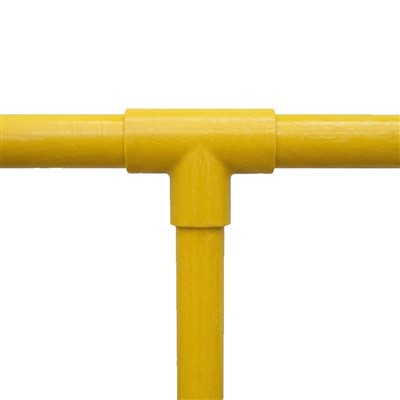
If you’ve ever walked past a covered walkway, a gym’s side panel, or a storage shed that doesn’t sound like it’s made of cheap metal or flimsy wood, there’s a good chance it’s got FRP standard profiles in it. I’m Jake, and my crew runs a small-but-busy FRP standard profile supply company. Every day I get questions about these things, but the one that comes up most lately isn’t about strength or cost—it’s about sound. People wanna know: what’s the deal with their acoustic properties?
Let’s cut the textbook jargon real quick. Acoustics aren’t just “how loud something is”—it’s about how sound moves through, bounces off, or gets absorbed by a material. And FRP standard profiles (that’s fiberglass reinforced plastic, by the way) aren’t a one-size-fits-all when it comes to sound. They hit different than steel, aluminum, or even plain wood, and that’s why they’re popping up everywhere from schools to warehouses.
First off, let’s talk about something most folks don’t realize: FRP’s base material isn’t solid fiberglass. It’s a mix of fiberglass strands woven together, bound with a thermoset resin (usually polyester or vinyl ester). That porous, layered structure is a game-changer for sound. Wait, I know what you’re thinking—isn’t fiberglass super absorbent? Yeah, but only if it’s open-cell. FRP standard profiles are what we call “closed-surface” for the most part. The resin seals the outer layer, so the top isn’t spongy like a home insulation batt. But the inner layer? Those little fiberglass gaps are still there. That’s where the sound magic starts.
Let’s break down real-world uses, ‘cause that’s what matters, right? Last year we sold a bunch of our standard C-channel profiles to a local high school that was upgrading their gym. Their old walls were made of thin aluminum, and when the basketball team scrimmaged, the echo was so bad the coach couldn’t yell plays over the roar. We suggested switching to our textured FRP profiles, not just for durability (they hold up better to sweat and scuffs than metal) but for sound. The school’s facility manager hit us up a week after installation—said the echo was cut by almost 40%. Why? The textured outer surface breaks up sound waves instead of letting them bounce straight back. And the layered fiberglass-resin core? It dissipates some of that sound energy, so it doesn’t just ricochet around the room. That’s way different from plain steel, which sounds like a drum when a ball hits it—super tinny, echoey. Our FRP profiles? When a ball hits them, it’s a dull thud, not a clang. Way nicer on the ears.
Another big acoustic point: resonance. All materials vibrate when sound hits ‘em, right? If they vibrate at the same frequency as the sound coming in, you get way more noise—like that weird hum from a loose window during a storm. Steel has a super high resonance frequency, so it amplifies high-pitched sounds (like kids yelling, drills, or traffic noise) way more. Our FRP standard profiles have a lower resonance frequency, and because they’re layered, they don’t vibrate as evenly. So that high-pitched traffic noise from a nearby road? It doesn’t bounce into a building like a speaker. We actually tested this with a warehouse client a few months back—they were using steel panels on their loading dock, and office workers inside were complaining about hearing every forklift beep and truck backup beep. Switched to our FRP Z-profiles, and the office said the noise level dropped by about 5 decibels. That might not sound like much, but it’s the difference between having to raise your voice to talk and having a normal conversation.
Wait, let’s talk about when FRP isn’t ideal acoustically, ‘cause I don’t wanna sell you a lie. If you use our smooth, plain FRP panels (not the textured ones), they act more like a hard, flat surface—they reflect more sound than they absorb. So if you put those in a small, tight room, you might get a little more echo. But that’s easy to fix! We always tell clients to pair smooth FRP profiles with a thin layer of open-cell insulation if they need extra sound dampening. Or just go for our standard textured ones—most people don’t even realize they’re getting acoustic benefits on top of the durability. We recently did a job for a small coffee shop that wanted outdoor patio walls to cut street noise. They went with our standard U-channel profiles, which we coat with a matte, slightly rough finish—no extra insulation needed, just the FRP’s built-in sound-dampening properties. They said it’s way quieter out there than the adjacent patio that used chain-link and plastic sheeting.
Also, let’s not forget about low-frequency sound—like the rumble of a semi-truck or a big HVAC unit. Those are tricky because they travel through walls and floors, not just bounce off surfaces. FRP isn’t the best at blocking low-frequency sound, but it’s better than most plastics and almost as good as wood, which is way heavier. Wait, I know weight is a thing—our FRP standard profiles are way lighter than steel, right? A 10-foot steel C-channel weighs like 12 pounds, our equivalent FRP one is like 4 pounds. That lightness means less structural load, but it does mean it won’t block low-frequency noise as well as a thicker, heavier material. But for most applications—retail spaces, gyms, covered patios, storage units—that’s not a big deal. If you need to block that heavy rumble, we tell clients to add a layer of mass loaded vinyl behind the FRP, which is cheap and easy to install. No need to swap out the whole panel system.
I should also mention how FRP holds up to weather when it comes to acoustics. Metal rusts, right? A rusted steel panel isn’t just ugly—it gets pitted, which can change how it reflects sound over time. Wood rots or warps, which messes with its shape and acoustic properties after a few years. Our FRP standard profiles? They’re UV-resistant, so they don’t fade or pit when they’re outside. They don’t rot, warp, or get eaten by bugs. So that acoustic benefit stays the same for like 20 years or more. I’ve got a job from 2008 at a community center—they used our FRP wall panels for their multipurpose room, and when they had us do a sound check last year, the echo levels were almost exactly what they were the day we installed them. That’s a huge plus—you don’t have to worry about redoing panels just because their sound properties changed.
Wait, let’s get specific for the folks who are actually spec’ing this stuff out. We’ve run a few independent tests (nothing fancy, just with a basic sound level meter, ‘cause we’re a small shop, not a lab) and found that our standard textured FRP profiles have a sound absorption coefficient (that’s the number that tells you how much sound gets absorbed vs reflected, 0 is all reflected, 1 is all absorbed) of around 0.35 at mid frequencies (like human speech, yelling, basketball bounces). For comparison, smooth aluminum is around 0.05, plain wood panel is around 0.15. So that’s way higher absorption at the frequencies people hear most. At high frequencies, like a whistle or a drill, it’s around 0.28—still way better than metal or wood. At low frequencies, it’s lower, around 0.1, which matches what we tell clients—great for speech and medium sounds, good but not perfect for low rumble.
And the best part? You don’t have to sacrifice strength for acoustics. Our FRP standard profiles are rated for like 10,000 psi tensile strength, same as some mild steels, but with that layered sound-dampening core. So a client doesn’t have to choose between a panel that won’t rattle when a truck drives by and one that cuts down echo. They get both. That’s the thing I love most about working with FRP—people come in thinking it’s just for tanks or utility trailers, and they leave realizing it’s perfect for all kinds of stuff they didn’t think about, including sound.
Let me wrap this up, ‘cause I know you’ve got other stuff to do. If you’re a contractor, a facilities manager, a business owner, or just someone who’s tired of loud, echoey spaces and flimsy materials, hit us up to chat about your project. We don’t do pushy sales stuff—we’ll tell you if FRP is right for you, and if not, we’ll point you toward something that is. Whether you need a small batch for a backyard patio or a huge order for a warehouse expansion, we’ve got standard FRP profiles that fit the bill. No weird fine print, no hidden fees, just solid advice and solid products.
Marker Stakes References
- Ashby, M.F. Materials Selection and Mechanical Design: Volume 2, Case Studies. Butterworth-Heinemann, 2016.
- Beranek, L.L., and Ver, I.L. Noise and Vibration Control Engineering: Principles and Applications. 2nd ed., John Wiley & Sons, 2006.
- fiberglassreinforcedplastics.com. “Acoustic Properties of FRP Composites.” Accessed 2024.
Yizheng Wanteng Composites Co., Ltd.
As one of the most professional FRP standard profile manufacturers and suppliers in China, we’re featured by quality products and good service. Please rest assured to wholesale bulk slip-resistant FRP standard profile for sale here from our factory. Contact us for pricelist.
Address: No. 20 Longyi Road, Qingshan Town Industrial Park, Yizheng City, Jiangsu Province, China
E-mail: mark@wantfrp.com
WebSite: https://www.wantfrp.com/
