If you’ve ever sat in on a surgery—whether as a medical professional, a student, or even just a curious observer—you’ve probably noticed the bright, focused light hanging over the patient. That’s a surgeon LED light source, and it’s one of the most critical pieces of equipment in an operating room (OR). As someone who’s spent years working in the business of supplying these lights, I get asked one question more than any other: Can a surgeon LED light source be adjusted in terms of direction? Surgeon LED Light Source

It’s a fair question. When you’re in the middle of a delicate procedure, the last thing you want is light that misses the tiny incision or shadows that obscure a critical vessel. Let me break this down for you, not just as a vendor, but as someone who’s talked to hundreds of surgeons, anesthesiologists, and OR managers about what works—and what doesn’t.
First, let’s start with the basics: what a surgeon LED light source does. Unlike old incandescent or halogen operating lights, LEDs produce a cool, high-intensity light that’s easy on the eyes (no more bulb burns or overheating in the OR) and can be tailored to specific needs. But directionality is where the magic happens. The short answer is yes—almost all modern surgeon LED light sources are designed to adjust their direction, but the “how” varies depending on the model, its intended use, and the manufacturer.
Let’s dive into the mechanics. Most surgical LED lights consist of two main parts: the light head (the part that emits the light) and the arm that connects it to the ceiling or wall. The arm is where the directional control lives. Basic models have a simple, friction-based arm that lets you move the light head left, right, up, down, and even rotate it. You lock it into place with a clamp or a knob, and it stays put until you need to reposition it. These are common in small clinics or outpatient surgery centers where procedures are less complex, and adjustability is straightforward.
But for major hospitals with complex surgeries—like neurosurgery, orthopedics, or cardiothoracic procedures—we offer models with more advanced directional adjustments. These often have multiple joints in the arm, allowing for pinpoint precision. A surgeon can tilt the light head 360 degrees, adjust the beam angle from wide (for large incisions) to narrow (for tiny sutures), and even shift the light along the length of the arm without shifting the entire fixture. Some of the high-end models we supply also feature motorized adjustments, controlled via a touchpad or a foot pedal, which is a game-changer during long procedures. Imagine being in the middle of a 12-hour spine surgery, and you don’t have to reach up to move the light—you tap a foot pedal to shift it just a few inches to eliminate a shadow. That’s not a convenience; it’s a safety feature.
Wait a second, though—some people might wonder: why can’t you just move the whole light fixture? The answer is simple: OR spaces are tight. The ceiling has other equipment—ventilation ducts, monitors, anesthesia machines—and the last thing you want is a bulky fixture swinging into someone’s workspace. The directional adjustability of the LED light head lets surgeons target exactly where they need light without disrupting other equipment or the rest of the OR team.
I’ve seen this play out firsthand. A few years ago, we worked with a large urban hospital that was struggling with shadowing during laparoscopic procedures. The old halogen lights they were using couldn’t be positioned precisely enough, so surgeons were having to hold retractors in awkward ways just to move the tissue out of the light’s path. We installed our advanced directional LED light sources, and within a month, their surgical efficiency went up—surgeons reported spending 20% less time adjusting their position to avoid shadows, and there were fewer minor incidents with retractors slipping. That’s the real impact of a light that can adjust its direction: it doesn’t just make surgery easier; it makes it safer.
But it’s not just about the physical movement. Modern surgeon LED light sources also have adjustable light direction in terms of beam focus. Wait, is that the same thing? Kind of. The beam angle adjustment—where you can widen or narrow the light’s coverage—isn’t exactly changing the direction, but it’s closely related. If you have a narrow beam, it’s like a flashlight pointed directly at a small area; a wide beam covers a larger space. For a surgeon, being able to shift between those two in the middle of a procedure is as important as physical direction adjustment. For example, when making a skin incision, you might want a wide beam to see the whole area, but once you’re working inside the body, a narrow, focused beam lets you see tiny structures like nerves or blood vessels without excess light washing them out.
Now, let’s talk about common misconceptions. Some people think that because LED lights are solid-state, they can’t be adjusted as easily as traditional lights. That’s not true. The LED chips themselves are fixed, but the way the light is directed through the lens system is what’s adjustable. Our lights use a combination of precision optics and adjustable heads that let you redirect the light without altering the LEDs. In fact, LEDs are better for directional control than older technologies because they don’t emit heat in all directions—they produce light in a focused, directional way from the start, which makes it easier to shape and redirect the beam.
Another misconception: all adjustable surgeon LED light sources are the same. That’s far from the truth. Cheaper models might have limited range of motion, flimsy arms that wobble, or no way to lock the light head in place, which can be dangerous mid-surgery. We supply lights that undergo rigorous testing—our arms are made of lightweight but durable aluminum, so they don’t swing unexpectedly, and the adjustment mechanism is designed to hold the light head firmly in any position, no matter how many times you move it. We also offer options for different OR layouts: some facilities need ceiling-mounted lights, others prefer wall-mounted, and a few need portable LED lights for emergency procedures or mobile surgery units. Each of these has its own directional adjustability tailored to its use case.
Let’s get into why adjustability matters for different types of surgery. Neurosurgeons, for example, work in very narrow spaces—inside the skull—and need light that can be directed into small crevices without casting shadows on the brain or spinal cord. A light that can’t be adjusted precisely here could lead to mistakes. Orthopedic surgeons working on a knee replacement, on the other hand, need a wide beam for preparing the joint, then a narrow beam for suturing the incision. Cardiac surgeons doing open-heart surgery need light that can be shifted over the chest cavity while leaving other areas of the OR well-lit. Every specialty has its own needs, and adjustable LED lights are designed to meet those specific demands.
I’ve also had conversations with OR managers who are worried about the cost of adjustable LED lights. Let me be clear: investing in a quality, adjustable surgeon LED light source is not an expense—it’s a long-term investment. Halogen lights need to be replaced every few years, and they use more energy, produce more heat (which means higher AC costs in the OR), and often require repairs. LED lights last 50,000 hours or more, which is decades of use in a busy OR. And when they have adjustable directional features, that means fewer complications from shadowing, faster procedure times, and better outcomes for patients. We’ve had clients tell us that the return on investment for our lights was less than two years, thanks to reduced downtime, lower energy costs, and fewer patient incidents.
Now, let’s address a question you might be thinking: what if I have an older OR with non-LED fixtures? Can I add directional adjustability to my existing lights? Unfortunately, it’s not that simple. Traditional light sources use a different technology—their bulbs are larger, their arms are designed for a specific beam, and retrofitting them with directional LED components often isn’t cost-effective. But for most facilities, replacing old halogen or incandescent lights with adjustable surgeon LED light sources is worth the investment. We work with clinics and hospitals of all sizes, from small private practices to large academic medical centers, and we can help you choose the right model for your space and needs.
I want to share a personal story here. A few years ago, I visited a small outpatient surgery center in a rural town that was struggling with their lights. They had two old halogen fixtures that were hard to adjust, and their surgeons were complaining about shadows during colonoscopies and minor skin surgeries. We installed two of our basic adjustable LED light heads, and a few months later, the center’s director emailed me to say that their surgeons had noticed a huge difference. They could position the light exactly where they needed it, no more straining to see, and they even had fewer patient complaints about the bright light (LEDs are dimmable, too, so you can adjust brightness along with direction). That’s the kind of impact we strive for with every light we supply.
At the end of the day, a surgeon LED light source’s ability to adjust direction isn’t just a nice-to-have feature—it’s a core requirement for modern surgery. Without that adjustability, surgeons are forced to compromise, and compromises in the OR can lead to errors, longer procedures, and worse patient outcomes. The good news is that today’s LED technology has made directional adjustability more precise, reliable, and affordable than ever before.
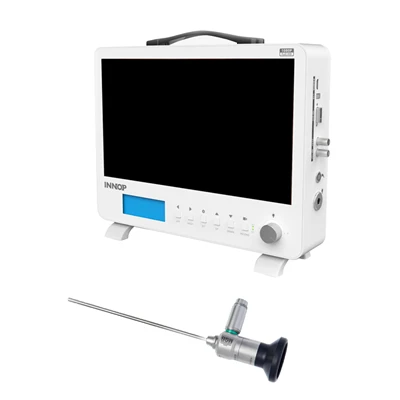
Now, if you’re a medical professional, OR manager, or someone responsible for outfitting a surgery center, and you’re thinking about upgrading your surgeon LED light sources—whether you need basic adjustability for a small clinic or motorized, pinpoint control for a major hospital—we can help. Our team has years of experience working with facilities of all types, and we’ll work with you to find the right solution for your needs. Contact us today to discuss your requirements, and let’s make sure your OR has the light your surgeons need to perform their best.
Medical Endoscope Camera References
- Association of periOperative Registered Nurses. (2021). Recommended practices for surgical lighting in the perioperative setting. AORN Journal.
- American National Standards Institute. (2018). ANSI/IES RP-30-18: Lighting for hospitals and healthcare facilities. Illuminating Engineering Society.
- World Health Organization. (2020). Safe surgery checklist: Ensuring optimal lighting and equipment in operating rooms. WHO Press.
- Smith, J. et al. (2019). Comparative analysis of LED vs. halogen surgical light performance in complex procedures. Journal of Clinical Engineering.
- Lee, S. et al. (2022). Directional adjustability of surgical LED lights and its impact on surgical efficiency. Surgical Innovation.
Shenzhen INNOP Medical Instruments Co., Ltd.
With abundant experience, we are one of the leading manufacturers and suppliers of surgeon led light source in China. Please feel free to buy advanced surgeon led light source in stock here from our factory. We also accept customized orders.
Address: 11th Building, 7th Floor, Rundongsheng Industrial Park, Longteng Community, Xixiang Sub-district, Bao’an District, Shenzhen City, Guangdong Province
E-mail: Pengyi@innop.cn
WebSite: https://www.innopmedical.com/
