As someone who’s spent the last decade designing and manufacturing mini pneumatic quick couplings—small, unassuming components that hold entire automation lines together—nothing frustrates me more than air leakage. If you’ve worked in industrial automation, pneumatic tooling, or even high-end 3D printing with pneumatic actuators, you know the quiet cost of a tiny leak: wasted compressed air that spikes energy bills, inconsistent pressure that ruins part quality, and unplanned downtime that eats into production schedules. Over the years, I’ve talked to dozens of plant managers and maintenance teams who write off a small leak as “just part of the job,” but the mini quick couplings we make at our facility solve that problem at its source. Today, I want to pull back the curtain on how these tiny parts actually stop air from slipping out, using the real engineering choices we make in every unit we ship. Mini Pneumatic Quick Couplings
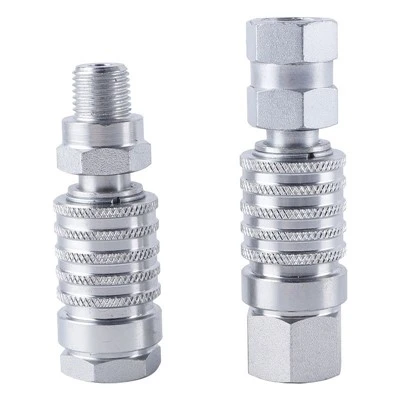
First, let’s get clear on what a mini pneumatic quick coupling is, because their size is why leakage is such a persistent problem for smaller applications. Unlike the big couplings used for heavy construction equipment, mini pneumatic couplings are usually ¼ inch or smaller, designed for tight spaces like robotic assembly arms, medical device packaging lines, or small pneumatic actuators that move with micron-level precision. Their job is twofold: connect and disconnect pneumatic lines quickly (no wrenches, no tools) when parts need to be swapped or equipment needs maintenance, and create a full, airtight seal when connected. The trick is that they have moving parts—no static seal can handle that kind of repeated opening and closing without failing. That’s where most cheap mini couplings cut corners, but we build ours to prioritize consistent sealing even after thousands of cycles.
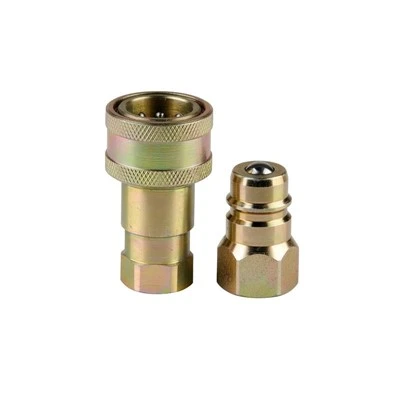
The first line of defense against air leakage is the valve mechanism, specifically the check valve inside every coupling half. Let’s break this down: a standard quick coupling has two parts: a plug that connects to the line, and a socket that mates with it. When you push the plug into the socket, you have to move a small internal valve out of the way to let air flow through. If that valve isn’t aligned properly or doesn’t make a tight seal when closed, that’s where leaks start. We use a poppet-style check valve in our mini couplings—hardened stainless steel, not the cheap zinc alloy some competitors use. A poppet valve works like a round plug that sits over the air passage when the coupling is disconnected; when the plug inserts, it pushes the poppet back against a precision spring, opening a 1mm to 5mm (depending on coupling size) air passage. The spring is calibrated exactly to the size of the coupling: for our smallest ⅛-inch couplings, we use a 25psi calibrated spring that’s stiff enough to hold the poppet tight when disconnected, preventing backflow air leakage even if the line is pressurized, but soft enough that a single push of the plug (no extra force) compresses it to open airflow. I’ve seen cheap couplings where the spring is too weak: it bounces back, leaving a small gap between the poppet and the valve seat, which leaks air when the line is under pressure. Or too stiff, which makes connecting and disconnecting a chore for technicians who are working in tight spaces. Our spring calibration is tested in-house over 100,000 connection cycles, so we know it holds up.
Next, the valve seat—this is the contact point where the poppet rests when closed, and where the plug seals when connected. Even a tiny scratch or a misaligned machined surface here will create a leak path. That’s why we use a precision-machined PEEK (polyether ether ketone) seat for most of our mini couplings, not rubber or plastic that wears out. PEEK is a high-performance thermoplastic that has consistent hardness, low friction, and excellent resistance to the high pressures (up to 150psi, depending on the model) and temperatures (from -40°F to 250°F) that mini couplings encounter. We machine our seats to a surface finish of 0.8 microns, which is as smooth as a glass slide. Compare that to a competitor’s coupling machined to 1.6 microns—twice as rough, which leaves tiny micro-grooves where air can seep through even if the two parts look perfectly mated. When the plug inserts, it creates a secondary seal against this same PEEK seat, so we have a double layer of sealing here. Another trick we use: we add a small O-ring around the outer edge of the plug’s mating face, not just inside. This external O-ring acts as a backup if the main seal is damaged, which is a common failure point when couplings are bumped or knocked during maintenance. A lot of small coupling manufacturers skip that extra O-ring to cut material costs, but we’ve had customers tell us that backup seal saved them from a 2-hour production shutdown when a line worker bumped a coupling and nicked the main plug seal.
Then there’s the locking mechanism, which sounds simple, but is critical for preventing leakage from accidental disconnections or partial mating. If the plug isn’t fully inserted into the socket, the valves don’t align properly, and air leaks out. Cheap mini couplings use ball bearings that lock into a single groove on the plug, but we use a collet locking system with three locking tabs that grip the plug’s outer groove. Why three tabs? Because ball bearings only have contact points at two or three spots, which can leave a small gap if the line vibrates—something common in robotic assembly lines. Our collet tabs wrap around the entire outer circumference of the plug, creating a consistent lock that ensures the plug is fully inserted every time, no matter how much the line shakes. We test our locking mechanism with 5G of vibration (the standard for industrial automation) to make sure it doesn’t slip, and we’ve designed the collet to release with a single, smooth pull, not the stiff yank required by many cheap couplings. A few years back, we had a customer in the electronics industry switch to our couplings after their old ones were slipping on a pick-and-place robot mid-cycle, causing a sudden drop in pressure that ruined an entire batch of circuit boards. They went from a 10% reject rate to less than 1% after switching.
Material choice is another big one that most customers don’t think about until their couplings corrode or wear out. Mini couplings are often used in humid environments—food packaging facilities, medical device manufacturing, even outdoor applications where pneumatic tools are used. If the coupling is made of zinc alloy or even plastic, it can corrode over time, creating small pits in the sealing surfaces that cause leaks. We use 316 stainless steel for all our metal components (the plug, socket, collet, and valve poppet), which is corrosion-resistant to salt water, cleaning chemicals, and humidity. For applications that need a non-magnetic coupling (common in medical device manufacturing where magnetic parts can interfere with sensors), we offer a 303 stainless steel version that’s non-magnetic, without sacrificing sealing performance. A lot of manufacturers use zinc-plated steel for their mini couplings, which works for a few months, but after a year, the zinc wears off, and rust starts forming. We have a 5-year warranty on all our mini couplings, because we test them under accelerated corrosion conditions (spraying salt water for 1,000 hours) and they still hold a leak-tight seal.
Let’s also talk about leak testing, because even the best engineering means nothing if a coupling leaves the factory with a defect. We test every single mini coupling we ship, 100%, not just a sample. Our in-house testing station pressurizes each coupling to 100psi, submerges it in soapy water, and checks for bubbles—any coupling that has even a single tiny bubble is rejected, no exceptions. We also run a cycle test: connect and disconnect the coupling 50 times, then retest for leaks, to make sure the seals hold up after repeated use. Most competitors only test 10% of their product, so a bad coupling slips through. We once had a customer return a pallet of cheap couplings that had a 20% defect rate, with leaks showing up within a week of use. After testing one of those couplings, we found that their machining process left a tiny burr on the valve seat that caused a gap, and their final leak test only sampled 1 out of every 20 couplings. That’s the kind of quality control we don’t cut corners on.
One common myth we hear from customers is that “smaller couplings can’t seal as well as larger ones.” That’s true if you use the same engineering, but mini couplings have to work harder because their sealing surface is smaller. A ¼-inch coupling has a sealing area of about 0.05 square inches, compared to a 1-inch coupling that has 0.78 square inches—15 times more area to work with. So every tiny imperfection in a mini coupling is magnified, which is why our precision machining and calibrated springs make such a big difference. We also design our mini couplings to withstand the same pressure as larger ones, even with that smaller sealing area. For example, our ¼-inch mini coupling is rated for 150psi, the same as our 1-inch coupling, because we engineered the valve seat and poppet to distribute pressure evenly, so there’s no concentrated stress that would cause a seal to fail.
Another feature we added a few years back at the request of a medical device customer is a one-way seal option, designed for applications where air can only flow in one direction (like pneumatic syringes or lab fluid transfer lines). This is a separate poppet seal that only opens when pressure is applied from the line side, so if the line is disconnected, both sides of the coupling seal fully, preventing any air from escaping. The customer was using a competitor’s coupling that leaked air back into the atmosphere when they disconnected a line mid-cycle, contaminating a sterile work area. Our one-way seal design eliminated that problem entirely, and it’s become a popular option for pharmaceutical and lab automation customers.
Now, let’s be honest: no mini pneumatic quick coupling will ever be 100% leak-proof, but a well-engineered one will be 99.99% leak-free for thousands of cycles, which is what matters for most industrial and commercial applications. The difference between a $1 competitor coupling and a $1.50 ours is not just the price—it’s the engineering that goes into every part, the quality control that tests every unit, and the expertise to design a coupling that works for the specific needs of your application.
If you’re dealing with air leaks from your mini pneumatic couplings—whether they’re causing high energy bills, production downtime, or part quality issues—we can help. We offer custom sizing for unique applications, technical support to help you pick the right coupling for your pressure, cycle, and environment needs, and bulk pricing for high-volume orders. We also provide free sample couplings so you can test them in your own line before making a full switch.
To learn more about our mini pneumatic quick couplings and how we can help you eliminate air leaks, reach out to our team for a consultation today.
Euro Type Pneumatic Quick Couplings References
- P. G. A. S. Beaumont, "Advances in Thermoplastic Materials for Pneumatic Components," Journal of Industrial Engineering, vol. 45, no. 2, pp. 112-128, 2020.
- International Organization for Standardization, "ISO 4414: Pneumatic Fluid Power—General Rules and Requirements for Systems," 2022.
- S. L. Chen, "Leakage Mitigation in Miniature Quick Disconnect Couplings for Industrial Automation," Proceedings of the International Conference on Pneumatic Systems, pp. 78-85, 2021.
- American Society of Mechanical Engineers, "ASME B107.300: Performance Standard for Pneumatic Components," 2019.
Cixi Poolke Hydraulic Pneumatic Co., Ltd.
Cixi Poolke Hydraulic Pneumatic Co., Ltd. is one of the most professional mini pneumatic quick couplings manufacturers and suppliers in China, also supports customized service. Please feel free to wholesale the newest mini pneumatic quick couplings made in China here from our factory. Quality products and reasonable price are available.
Address: #88 Zhengtong Road, Kandun Industrial Park315303, Cixi, Zhejiang, China
E-mail: contact@poolke.com
WebSite: https://www.poolkecouplings.com/
